
Plant Introduction
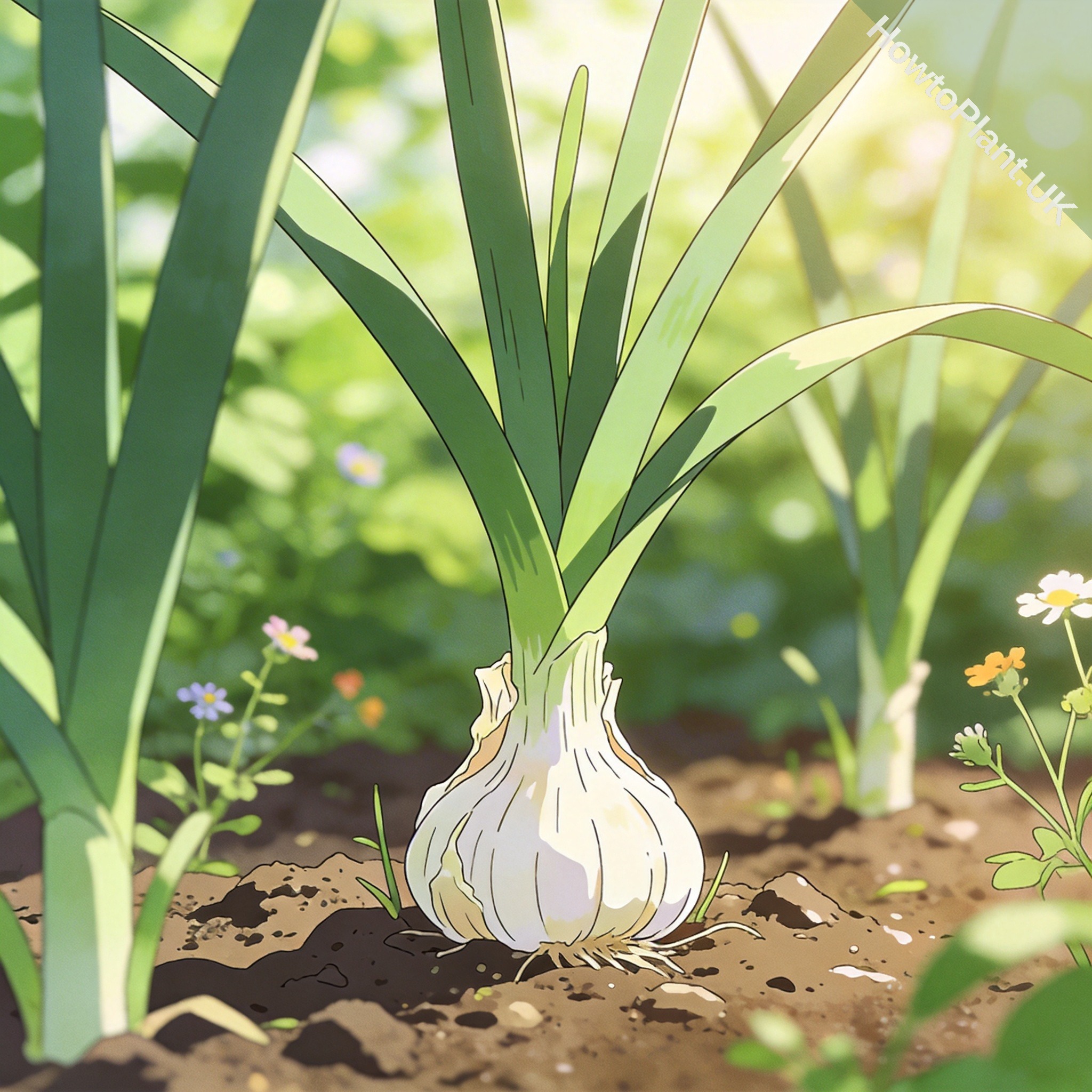
Garlic also known as Allium sativum is a popular and versatile vegetable that has been cultivated for thousands of years for both culinary and medicinal purposes. Native to Central Asia this pungent bulb is a staple in cuisines around the world and is incredibly easy to grow in home gardens.
Throughout the year Garlic follows a distinct seasonal cycle. It is typically planted in fall about 4 6 weeks before the ground freezes allowing the roots to establish before winter dormancy. During the cold winter months the bulbs remain dormant but continue to develop roots underground. In spring as temperatures warm the green shoots emerge and grow vigorously. By mid to late summer the tops begin to yellow and fall over indicating that the bulbs are ready for harvest.
Growing Conditions
Light Requirements
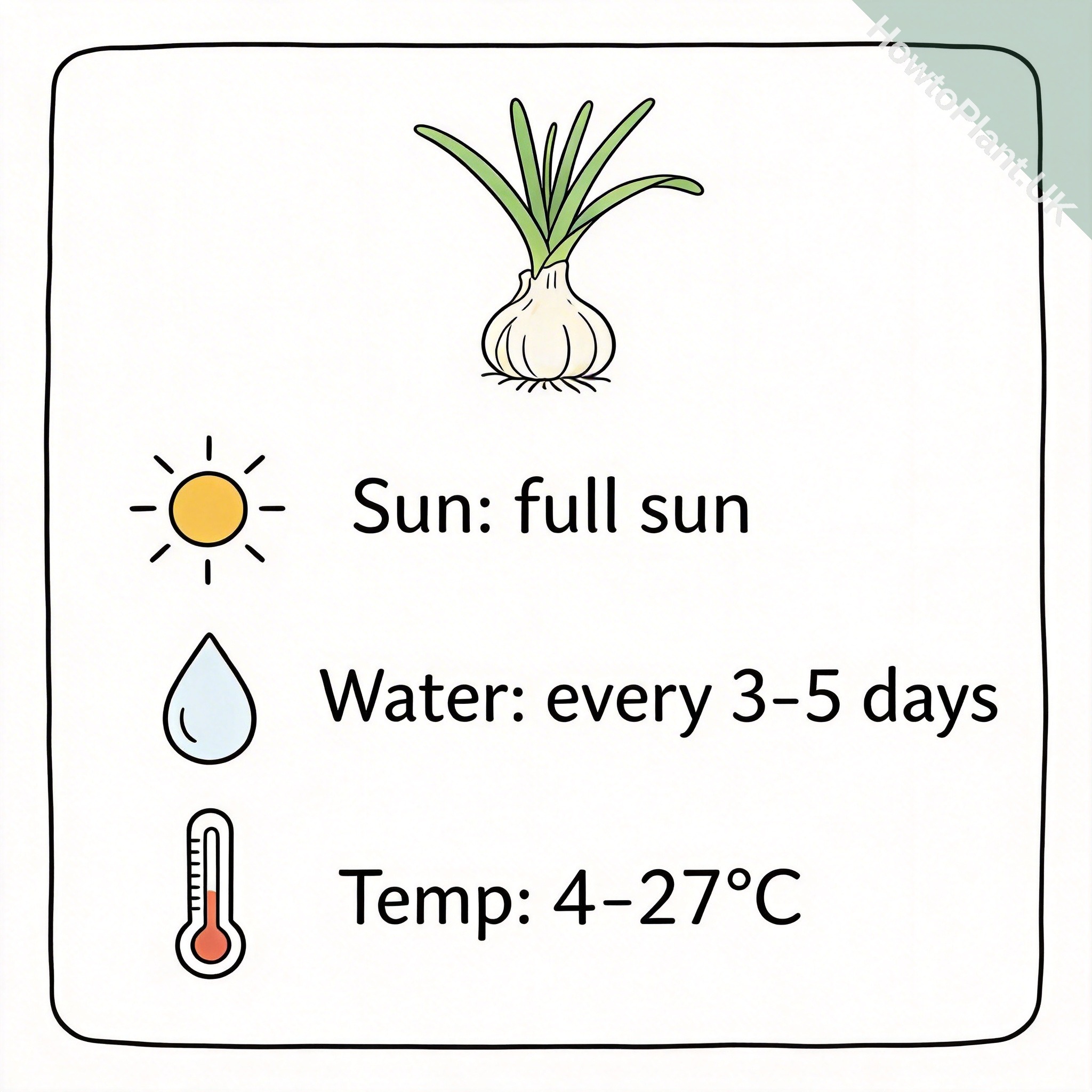
Garlic thrives in full sun. Garlic requires at least 6-8 hours of direct sunlight per day for optimal bulb development. Insufficient light can lead to smaller bulbs and reduced vigor. Orient rows north to south to maximize sun exposure.
Temperature Preferences
This plant prefers temperatures between 40-80°F (4-27°C) during its active growth period. Prolonged exposure to temperatures below 20°F (-7°C) should be avoided. Garlic needs a cold stratification period (vernalization) of several weeks below 40°F (4°C) for proper bulb formation. After this, it prefers moderate temperatures for growth, with extreme heat potentially causing premature bolting or smaller bulbs. It is quite cold hardy once established.
Watering
When it comes to watering Garlic it is best to follow a consistent schedule. For most conditions this means watering about every 3-5 days during the growing season and not applicable during the dormant period. Garlic needs consistent moisture, especially during the active growing season (spring and early summer). Aim for about 1 inch of water per week, either from rainfall or irrigation. Reduce watering significantly as harvest approaches to prevent rot and encourage curing.
Soil Requirements
Garlic requires well-draining, rich loamy soil for healthy growth. The pH should be around 6.0-7.0 for optimal nutrient uptake. Garlic thrives in fertile, well-drained soil rich in organic matter. Heavy clay soils can impede bulb development and lead to rot, while overly sandy soils may not retain enough moisture or nutrients. Amend soil with compost before planting to improve structure and fertility.
Planting Tips
• Plant in fall about 4 6 weeks before the first expected frost for best results
• Break apart the bulbs into individual cloves just before planting use the largest healthiest cloves for biggest bulbs
• Plant cloves 2 3 inches deep and 6 8 inches apart in rows spaced 12 18 inches apart
• Plant with the pointed end facing up and the basal plate facing down
• Mulch heavily after planting with straw or leaves to conserve moisture suppress weeds and protect from extreme cold
• Remove any flower scapes that appear in early summer to direct energy into bulb growth
What can Garlic be used for
• Essential culinary ingredient used in countless dishes worldwide for its distinctive flavor and aroma
• Medicinal properties known for its antibacterial antifungal and cardiovascular benefits
• Natural pest repellent when planted near roses tomatoes and other garden plants
• Can be stored for several months under proper conditions providing a long lasting supply
• Easy to preserve by drying freezing or making into garlic powder or garlic oil
• Adds depth and complexity to sauces soups stir fries marinades and many other recipes